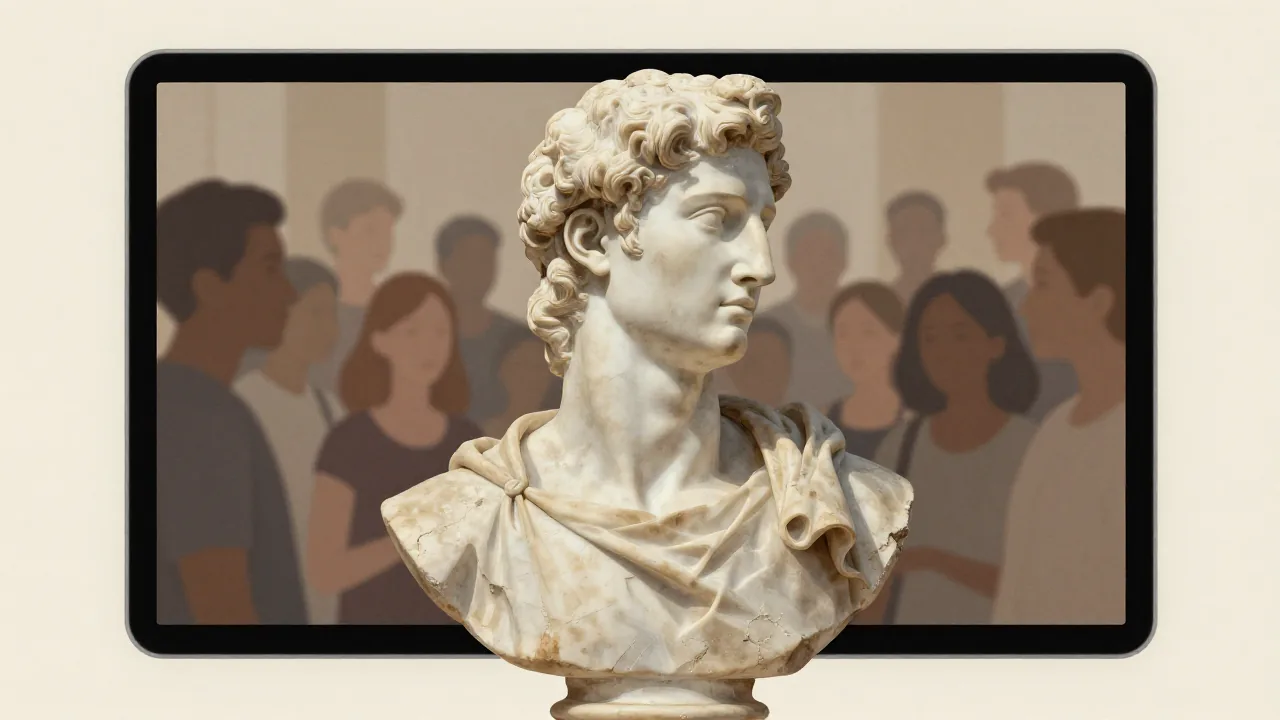
Ancient Rome is very used to being looked at. We see versions of it everywhere: in films and TV series, in school syllabi, and in contemporary politics.
古罗马早已习惯被凝视。我们在各处都能看到它的翻版:在电影和电视剧中,在学校课程大纲里,以及在当代政治话语中。
Melbourne Museum’s exhibition Rome: Empire, Power, People holds the promise of a fresh look, with the majority of artefacts, borrowed from the Museo Nazionale Romano (Rome) and the Museo Archeologico Nazionale di Firenze (Florence), not seen previously in Australia.
墨尔本博物馆的「罗马:帝国、权力、人民」展览承诺带来全新的视角,其展出的大部分文物借自罗马国家博物馆和佛罗伦萨国家考古博物馆,此前从未在澳大利亚展出过。
At first, it feels like business as usual: even though the materials are fresh to our shores, the exhibition mostly sets them up in familiar thematic groupings for this subject: ambition, life, luxury, the divine and eternity. The way these are displayed feels familiar, too.
起初,一切如常:尽管这些材料对我们来说是新鲜的,但展览主要仍按该主题熟悉的分类进行编排:野心、生活、奢华、神性与永恒。其展示方式也令人感到熟悉。
But the exhibition’s design offers unexpected insights: room to room, the presentation offers a de-facto history of how we have looked at ancient Rome over the years. This design invites us to consider how societies in different eras have framed this complicated culture, and how we frame it now.
但展览的设计提供了意想不到的洞见:步入每个房间,策展呈现实际上构成了一部关于我们多年来如何审视古罗马的历史。这种设计邀请我们思考,不同时代的社群如何框定这一复杂的文化,以及我们当下又是如何框定它的。
We start with the Romans’ own vision of their even more ancient selves: an altar with Romulus and Remus, two characters from the city’s mythological beginnings.
我们从罗马人对自己更古老自我的愿景开始:一座刻有罗慕路斯和雷穆斯的祭坛,这两人是这座城市神话起源中的关键人物。
Next, we see the death of Caesar in 44 BCE and the demise of the republic – through the eyes of 16th and 18th-century masters. Paintings by Romano, Camuccini and others are projected onto the walls, including a striking depiction of the assassination.
接着,透过16世纪和18世纪大师们的眼睛,我们看到了公元前44年凯撒之死及共和国的覆灭。罗曼诺、卡穆奇尼等人的画作被投射在墙上,其中包括一幅引人注目的刺杀场景描绘。
With Caesar (and the republic) gone, we enter the era of imperial Rome. This next room, filled with sculptures of empresses and emperors adopts an almost Art Deco aesthetic. The ancient marble faces and our own are not quite so sleek, symmetrical, or geometric as the exhibition furniture, and so we notice the objects and notice ourselves wandering and looking.
随着凯撒(及共和国)的离去,我们进入了帝国罗马时代。下一个房间充满了皇后和皇帝的雕塑,采用了近乎装饰艺术(Art Deco)的美学风格。古代大理石面孔与我们自己的面孔,并不像展览家具那样光滑、对称或具有几何感,因此我们注意到了这些物件,也注意到了自己徘徊与凝视的身影。
Though no doubt the visual link is coincidental, this room’s aesthetic echoes the famous 1937 exhibition in Rome, which exemplified how the ancient city and its history were harnessed to the fascist politics of Mussolini’s Italy.
尽管这种视觉联系无疑只是巧合,但这间房间的美学呼应了1937年在罗马举行的著名展览,该展览典型地展示了古罗马及其历史如何被利用来服务于墨索里尼意大利的法西斯政治。
Next, the design shifts to digital reconstruction. We see the Colosseum, Nero’s Golden House and other parts of Rome made whole again via projections on the walls. The label tells us these buildings “look beyond the marks of age”, and indeed, they are crisp and clean and far from the dusty ruins that inspired them.
接下来,设计转向数字重建。我们通过墙上的投影看到斗兽场、尼禄的金宫等罗马其他部分重新变得完整。标签告诉我们这些建筑「超越了岁月的痕迹」,确实,它们清晰洁净,与启发它们的满是灰尘的废墟相去甚远。
They are also empty of people. Reimagining the ancient city digitally dates back to the 1990s, an era full of promises about how the digital would show us what we otherwise cannot see. 3D reconstructions of ancient buildings without the mess of daily life and people go even further back, including models of ruins and models that attempted to remake what was lost.
它们也空无一人。用数字方式重新构想古罗马可追溯到20世纪90年代,那是一个充满承诺的时代,人们相信数字技术将向我们展示 otherwise 无法看到的事物。没有日常生活混乱和人群的古代建筑3D重建甚至更早,包括废墟模型和试图重建失落之物的模型。
These examples, digital and not, keep us and Rome’s ancient inhabitants at a distance: it is a city to be seen, not lived.
这些例子,无论是数字的还是实体的,都让我们与古罗马的居民保持距离:这是一座被观看的城市,而非被居住的城市。
Moving from this version of Rome, we are immersed in another. Here the people return, with objects that tell us about families, workers (enslaved and not), actors, musicians, philosophers and others. We walk through and around loose recreations of an ancient Roman bathhouse, dining room and arena. In the dining room, food is made of plaster, or made to resemble it, evoking the 19-century copies of Roman objects that still line many galleries today.
从这一版本的罗马移步,我们沉浸在另一个版本中。这里人们回归了,展品向我们讲述着家庭、工人(包括奴隶和非奴隶)、演员、音乐家、哲学家等的故事。我们穿行并环绕在古罗马浴场、餐厅和竞技场的松散复原模型中。在餐厅里,食物由石膏制成,或使其看起来像石膏,这让人联想到至今仍排列在许多画廊中的19世纪罗马文物复制品。
The exhibition’s pivot from 'imperial grandeur' to 'people' is a welcome shift, yet the framing of 'workers (enslaved and not)' remains deeply problematic. By grouping enslaved labor alongside free workers in a 'life' category, the museum risks normalizing the brutality of slavery as just another facet of Roman daily life rather than a system of violent exploitation. We need to center the harm done to the enslaved, not just their presence, to avoid sanitizing the empire’s foundational violence.
展览从“帝国辉煌”转向“人民”是一个积极的转变,但将“工人(包括奴隶)”并列的框架依然极具问题。在“生活”类别中将奴隶劳动与自由工人混为一谈,博物馆有将奴隶制的暴行正常化为罗马日常生活的一个方面,而非一种残酷的剥削体系的风险。我们需要聚焦于对奴隶造成的伤害,而不仅仅是他们的存在,以避免粉饰帝国赖以生存的根本性暴力。